Sunday, May 8, 2011

Why do I care?
 “You have to take a lot of risks.”
 -- Paul Taylor
Paul Taylor is one choreographer of many talents and is always exploring new horizons in the dance world. I am very inspired by his versatility he displays throughout his work, never feeling the constriction to one idea or choreographic style. Taylor explores all different elements of the creation process of new dance works, different music, movement, theme, and costumes. Some choreographers tend to remain in a familiar place with music, movement style, or location, but not Paul Taylor. He explores new ideas with every new dance and is not afraid of a challenge. This is a place I hope to one day be in as a dancer or a choreographer. I want to achieve the same versatility Paul Taylor has achieved for himself as a famous and influential figure in the dance world. I want to take risks… a lot of risks.
Friday, April 22, 2011
Paul Taylor's Core Contribution

“To put it simply, I make dances because I can’t help it. Working on dances has become a way of life, an addiction that at times resembles a fatal disease. Even so, I’ve no intention of kicking the habit. I make dances because I believe in the power of contemporary dance, its immediacy, its potency, its universality. I make dances because that’s what I’ve spent many years teaching myself to do and it’s become what I’m best at. When the dances are good nothing else brings me as much satisfaction. When they aren’t I’ve had the luxury, in the past at least, of being allowed to create others.
Whenever a dance of mine is controversial it brings me much satisfaction. One of my aims is to present questions rather than answers. My passion for dance does not prevent me from being terrified to start each new piece, but I value these fears for the extra energy they bring. Getting to know the music I use is a great pleasure even though toilsome. After making sure that the rights to use it are affordable, each piece needs to be scanned, counted out and memorized. Since I’ve not learned to read scores, this can take an awful long time.”
Monday, April 11, 2011
The Bigger Picture...
Paul Taylor has seen, experienced, and still living through monumental moments in our country’s history. Being born during the Great Depression, in college during World War II, then through the sock hop days of the 50s, through the big protest in the 60s, and the rock music of the 70s and 80s. Experiencing these events throughout his life, Taylor clearly has used them as resources for his work in choreography. These real-life connections of his background create who he is as an artist and allow for endless amounts of inspiration to shape his choreography.

“From childhood on, I’ve been a reticent guy who spends a lot of time alone. I make dances in an effort to communicate to people. A visual medium can be more effective than words. I make dances because I don’t always trust my own words or, for that matter, those of quite a few others I’ve known. I make dances because working with my dancers and other cohorts allows me to spend time with trustworthy people I’m very fond of and who seldom give me trouble.”
Having directly come from the era of the Great Depression it is the most likely reason for his creation of Black Tuesday, a piece based on society during the great depression. His connection to the actual event creates a stronger interpretation that can be expressed through movement. Of course in the 1940s the country’s focus was directed towards the hardships and struggles of World War II. Taylor’s college years were experienced in this dark period of world history. Throughout his years creating movement and works, there has been a strong emphasis on war and hardship. One such piece that directly illustrates this “turbulent era” is Company B, which debuted in 1991. This work combines the hope and high spirits of a young nation, with the tremendous loss the families were suffering when their soldiers were not returning home to their arms.
  Another influential era Taylor experienced was the rebellious years of the 1960s. It was during this time that people began embracing liberation, defying authority, experimenting with drugs, and experiencing free love. This idea of controversy and freedom can be seen in many ways of Taylor’s work. In some pieces such as Changes, and Field of Grass he directly creates a focus on society in the 1960s and how they experimented with this new lifestyle of love and peace. But controversy is also a huge part of Paul Taylor’s work. Since the 1950s, Taylor has been labeled by Martha Graham as the “naughty boy of dance.” His obsession with controversy and raising eyebrows can best be describe in his own words: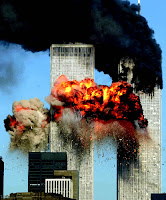
“Whenever a dance of mine is controversial it brings me much satisfaction. One of my aims is to present questions rather than answers. My passion for dance does not prevent me from being terrified to start each new piece, but I value these fears for the extra energy they bring.”
Growing up in the 1930s Taylor led a very “lonely” childhood, seeming to always be separated from his parents. This idea of seclusion loneliness may be due to the hardships of the Great Depression. This statement made by Taylor describes the impact his hard childhood has made on his artistic voice:

“From childhood on, I’ve been a reticent guy who spends a lot of time alone. I make dances in an effort to communicate to people. A visual medium can be more effective than words. I make dances because I don’t always trust my own words or, for that matter, those of quite a few others I’ve known. I make dances because working with my dancers and other cohorts allows me to spend time with trustworthy people I’m very fond of and who seldom give me trouble.”
Having directly come from the era of the Great Depression it is the most likely reason for his creation of Black Tuesday, a piece based on society during the great depression. His connection to the actual event creates a stronger interpretation that can be expressed through movement.
 Of course in the 1940s the country’s focus was directed towards the hardships and struggles of World War II. Taylor’s college years were experienced in this dark period of world history. Throughout his years creating movement and works, there has been a strong emphasis on war and hardship. One such piece that directly illustrates this “turbulent era” is Company B, which debuted in 1991. This work combines the hope and high spirits of a young nation, with the tremendous loss the families were suffering when their soldiers were not returning home to their arms.
  Another influential era Taylor experienced was the rebellious years of the 1960s. It was during this time that people began embracing liberation, defying authority, experimenting with drugs, and experiencing free love. This idea of controversy and freedom can be seen in many ways of Taylor’s work. In some pieces such as Changes, and Field of Grass he directly creates a focus on society in the 1960s and how they experimented with this new lifestyle of love and peace. But controversy is also a huge part of Paul Taylor’s work. Since the 1950s, Taylor has been labeled by Martha Graham as the “naughty boy of dance.” His obsession with controversy and raising eyebrows can best be describe in his own words:
“Whenever a dance of mine is controversial it brings me much satisfaction. One of my aims is to present questions rather than answers. My passion for dance does not prevent me from being terrified to start each new piece, but I value these fears for the extra energy they bring.”
One of the greatest tragedies our country has suffered, that even I have experienced, was the attack on the World Trade Center and Pentagon on September 11, 2001. The emotional impact on our country was so great it was hard to not feel connected to the epic loss our nation experienced. Paul Taylor is an artist that put these emotions to movement in Promethean Fire, debuting in 2002. In this piece he emphasizes the impact of destruction and the need for renewal of the spirit during a cataclysmic event that is suffered. This piece is said to be one of Taylor’s best and most powerful works.
Wednesday, March 30, 2011
Choreographic and Technical Influences

“There are infinite possibilities in dance and most of them have yet to be tried. The surface has just been scratched. I wish I could come back in a hundred years to see what’s happened.”
-Paul Taylor
These words by Paul Taylor sparked a thought of how modern dance, not even one hundred years ago, has shaped everything that we know in it today. Modern contemporaries such as Martha Graham, Merce Cunningham, Jose Limon, Doris Humphery, and many others are just such artists that created this new and experimental world of modern dance. They challenged the previous techniques, and each spinning new ideas, techniques, and movement qualities onto themselves and their dancers in order to make some sort of artist connection with anyone willing to grasp to it. Paul Taylor is also one such artist that was influenced by his past teachers, but also took what they gave him and molded it to himself creating an entirely new entity unique to him.
Paul Taylor began dancing at Syracuse University in 1952, and then later began seriously studying at the Juilliard School in New York City. His movement quality was characterized primarily as athletic and energetic. His first professional debut was made in 1953 as a dancer in Merce Cunningham’s company, one of Taylor’s greatest influences. I feel Cunningham’s influence on Taylor’s work and technique stems from his emphasis on athletic movement and a strong ballet background. Taylor’s movement is characterized by either strong, aggressive physicality, or by basic pedestrian movement. I also feel his sense of structure in dance and movement creation is of Cunningham’s influence. Although Taylor does not create his choreography with chance as Cunningham did, there is however a sense of structure to how the piece develops, always having a purpose and most of them created as a narrative with a defined beginning, middle, and end.
 Then in 1955 he became a soloist in Martha Graham’s company. Although he worked extensively in her school and company, Taylor’s movement is not a strong reflection of Graham’s focus of the contraction and also her extreme thematic and movement intensity. Graham’s core contraction is seen in Taylor’s choreography, but is definitely not as prevalent as it was in her work. He also directs his themes of his choreographic creations away from Graham’s extreme intensity. Although some of his works are intense such as Promethean Fire and Scudorama there is at least a sense of recovery and gentleness throughout, whereas it is not usual for Graham technique.
  Taylor also had the opportunity of working with ballet artist, George Balanchine in 1959. With his background with Merce Cunningham, Taylor has had the opportunity to focus on ballet technique. This gave him the step up when working with Balanchine. I feel that dancing in Balanchine’s company and also collaborating with him has influenced his use of ballet technique in his choreography. This can be.
 Paul Taylor has collaborated with artists of both design and music in order to make his works a success. Four such artists include Alex Katz, Santo Loquasto, Robert Rauschenburg, and John Rawlings. Katz was a painter and for Paul Taylor, a set designer. He has created designs for works such as Sunset, Lost, Found and Lost, Diggity, Polaris, and Last Look. Simplifying an image and making it cartoon-like characterize his work. Loquasto is featured in many of Taylor’s works such as Brief Encounters, Changes, Black Tuesday, Lines of Loss, Company B, and Promethean Fire, among many others. Rauschenburg his one of the most innovative artists of the twentieth century, he had the opportunity of collaborating with artists such as John Cage and Merce Cunningham, who are also revolutionary. His work is characterized by the basic imagery of common objects. He also designed costumes. His work can be seen in Taylor’s work such as Three Epitaphs and All, Tracer, Images and Reflections, and Seven New Dances: Opportunity. And finally, Rawlings, a costume designer and photographer collaborated with Taylor on works such as The Rehearsal, Cloven Kingdom, Esplande, and Public Domain.
Monday, March 28, 2011
Conversation with Paul Taylor
Paul Taylor discusses challenges and his past history as a modern dance choreographer with one of his previous dancers, Patrick Corbin. He provides inspiration and a mindset that a choreographer is required to posess in order to succeed in the dance world. He also describes what sets him apart from dancers and choreographers before him.
Interview with Paul Taylor
In this interview with Lindsey Dreyer from February 28, 2008, Taylor describes his work and his inspirations for his movement choices throughout his life work over his many years as modern dance choreographer. He also discusses his plans for that upcoming performing season with his company.


Wednesday, March 2, 2011
Paul Taylor Biography

In the mid-fifties Taylor’s talents began to emerge. He became friends and collaborators with the painters Robert Rauschenberg and Jasper Johns. Taylor shared their desire to bring the vernacular, or conventional aspects of ordinary life into the arts. Using gestures and movements from the street, Taylor’s work reflects the beauty and sadness of society. In a number of his early pieces, Taylor composed dances of pedestrian movements, such as checking a watch or waiting for a bus. Taylor felt that once the movement is seen separated from their context, one can recognize the richness of these everyday movements. For Taylor, a dance is the first step in returning the viewer to the street more aware of the beauty in the simple movements he or she sees every day.
From the 1950s to the 1970s he performed some of the most exciting and inventive dances of the time. He was actually given the title “naughty boy of dance” because of his cutting edge work. This work included modern music, mocking of public figures, and even incest and rape. His experimental work was Taylor’s way he broke away from conventionality and was simply a starting-off point for further elaboration of this idea. His later pieces combine this same purity and connection of performance with ballet. Among the best known of these are “Three Epitaphs” (1956), “Orbs” (1966), “The Book of Beasts” (1971), and “Airs” (1978). His “Aureole” (1962) is one of the most highly respected dance works of the time for its grace and technical difficulty. It is Taylor’s combination of the subtlety of ballet with the spontaneity of everyday gesture that has made him such a powerful force in modern dance. In 1974, Taylor retired his performance body and dedicated to choreography. It was then that he added to his already created works, making a total of 134 dances. Among them include Esplanade, Cloven Kingdom, Dust, Airs, Mercuric Tidings, Last Look, Musical Offering, Speaking in Tongues, Company B, Eventide, Black Tuesday, Promethean Fire, and Beloved Renegade.
For all of his contributions to the dance world, Taylor has been honored through many awards, some of which include the National Medal of Arts by President Clinton in 1993, the Algur H. Meadows Award for Excellence in the Arts in 1995 and was named one of 50 prominent Americans honored in recognition of their outstanding achievement by the Library of Congress’s Office of Scholarly Programs. He is also the recipient of three Guggenheim Fellowships and honorary Doctor of Fine Arts degrees from many honorary colleges such as California Institute for the arts, Duke University, and the Julliard School. Awards for lifetime achievement include a MacArthur Foundation Fellowship, also known as the “genius award,” and the Samuel H. Scripps American Dance Festival Award. Although no longer dancing, Taylor still is a thriving impact among modern dance where his main focus is on his company and continuing works.
Sunday, February 13, 2011
Who am I?

Throughout my three years as a student at the University of Wisconsin Milwaukee Dance Department I have already learned and encountered so many experiences, but the quote above illustrates my unknown path ahead of me. I have goals set for myself, but they are definitely not something I can see in the near future or even how they will happen. This journey is far from over and will never be over. It is a constant cycle of learning, exploring, and experiencing.
Self-realization is something I have been focusing on throughout this year. “Who am I?” is a question I continue to ask myself. I feel that who i am is greatly determined by both my past and also my goals for the future. My history in the dance world flashes back nineteen years to when I was two years old. My mom placed me in dance class to give me the “discipline and structure” she felt I was lacking. I obviously have not stopped since that day. In terms of training and technique, ballet was the primary focus, with Jazz and Duncan accents. The ballet was great preparation for modern technique, providing my body with alignment and extensions it needed to execute the new movement style. I also feel that it is actually one of the greatest influences on my daily life and my approach to everything in it, especially in dance. Respect is one of those products I took from my ballet training. It is something I value greatly both receiving and giving. It has engrained in my mind the importance of respecting yourself and your creative work, which in turn will lead others to do the same. With this in mind, it has also lead me to work hard to earn this respect and to really go the extra step by loving what I am creating, both movement wise and also personally.
The world of modern dance has opened my eyes to new and innovative ways of moving and also on how to incorporate it into self-expression. It has thrown me out of my safe zone and into a world of creativity and exploration. This is an aspect of dance that I deeply value. Dance is something that can describe me with my body, not words. Dance is something that can express my inner creativity. Dance is something that unleashes features of my ‘self’ that I have yet to discover, asking questions such as: Who am I? What do I want to do with my future? What makes me, me?
Discovering limits and continuing to expand them, and never allowing them to inhibit new experiences are ambitions I continue to make the center of my focus. Can I take more risks? Of course! This question is one that connected me with dancer and choreographer Paul Taylor who stated, “You have to take a lot of risks.” And its true, it’s the only direction to success, the only way to grow as a dancer and as a person. I will challenge myself to broaden my manner of thinking in order to open my mind to different styles and techniques. I plan to work very hard at becoming a versatile dancer and also a truly intelligent dancer. With this exploration and growth it forces me to become more confident in my choices and movement. I choose to dance because I want to make it my life, and the only way for me to be successful is to believe in the choices I make and stay open to new ideas. Taking risks, “a lot of risks.”
Subscribe to:
Posts (Atom)